
Brief 2016
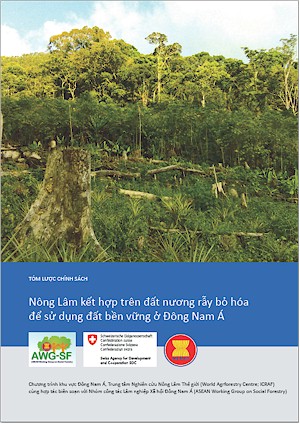
Swidden-fallow agroforestry for sustainable land use (in Vietnamese Language)
Abstrak
Swidden agricultural systems alternate annual food crops and perennial vegetation in a deliberate manipulation of natural vegetation successions. These systems are still widely used by farmers throughout Southeast Asia’s uplands and forest margins, sustaining a range of social and ecological services. The swiddening process is often combined with agroforestry systems, where abandoned fallows are planted with a variety of useful trees that can merge into forest ecosystems. These agroforests are integrated with farming systems and are a proven strategic option for smallholders, contributing to food security and diversification of production and incomes. This improves economic resilience while providing effective carbon sinks and essential environmental services. However, governments in the region have often preferred to support the rapid expansion of specialized monocultural systems rather than encouraging a gradual evolution.
Detail publikasi
Berkas
Sitasi
Swidden-fallow agroforestry for sustainable land use (in Vietnamese Language). (2016). Diakses dari https://beranda.agroforestri.id/publikasi/?pid=4320